

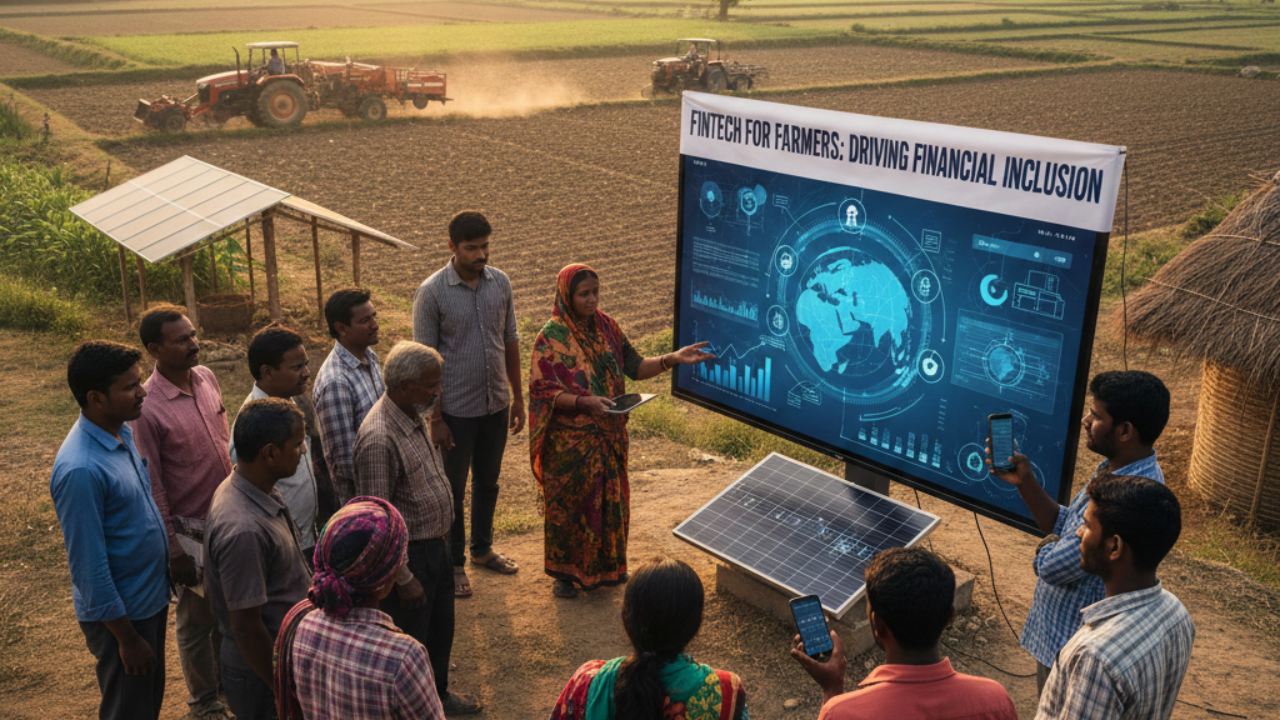
Agricultural industry has been regarded as the staple of most economies, particularly in the developing ones. However, despite its significance, farmers do not normally have an easy time accessing financial services. The traditional banks and lending institutions tend to see smallholder farmers as high-risk clients given that the weather conditions are unknown, the market is fluctuating and their credit histories are not established.
Farmers lack access to credit, and this means that they cannot purchase better seeds, tools, and technology. This is detrimental to their output and revenues. Luckily, the emergence of financial technology, or fintech, is beginning to alter this narrative and offer more opportunities by which farmers across the globe can receive access to financial services.
Fintech offers new ways of delivery of financial services to farmers, which is usually via mobile apps, online platforms, or digital wallets. Through these platforms, farmers are able to get credit, insurance, payment services, and even digital marketplaces without the help of conventional banking infrastructure.
The Fintech in Agriculture Growth
FinTech refers to the application of any technology to streamline, facilitate, and innovate financial services. Over the past decade, fintech has expanded beyond the services that were predominantly accessible in urban centers, like mobile payments and internet banking, to services that can be helpful in the rural and agricultural regions.
Fintech solutions provide farmers with access to financing, insurance, payment systems, and online markets, typically accessed via mobile phones or other devices with internet connectivity. One of the new finance tools that farmers need is the digital financing platform. Such a platform can ascertain creditworthiness more effectively.
Than the traditional banks because it is going to utilize alternative sources of data such as crop yield, satellite images, and mobile transaction history. This allows farmers to acquire loans within a short time and at fair interest rates, as well as farmers who lack formal financial records. The digital disbursement also implies that the remote farmers do not need to travel to distant branches of a bank, which saves them time and money.
How Fintech Can Turn people into millionaires
Financial inclusion involves ensuring that individuals and enterprises have access to helpful and affordable financial products and services. In the case of farmers, fintech helps them to be incorporated in a variety of ways:
- Getting a loan
Smallholder farmers are also not able to secure loans easily due to a lack of any collateral or credit histories. Fintech platforms use alternative credit scoring, including mobile money, farm input purchases, and crop history, helping farmers access funds. - Market Access and Online Payments.
Fintech used by farmers to pay them for their crops online, and that why they do not need to depend on the cash transaction so much and the possibility of theft reduces. Digital payment systems also enable farmers to market or sell directly to the buyers or cooperatives via online markets. This increases the size of the market and clarity in prices. The money that farmers receive out of their harvests could saved by eliminating intermediaries. - Insurance Options
There are always threats to the livelihood of farmers due to pests, diseases, and unpredictable weather. The insurance offerings that Fintech has enabled include parametric or weather-indexed insurance, where payments made immediately when a condition occurs, rather than having to wait for the lengthy results of an assessment. This will make sure that the farmers do not make a huge loss and also make them more adaptable to the risk. - Financial Literacy and Education.
Instructional features in a number of fintech companies assist farmers to learn how to handle loans, save money, and plan ahead. Fintech assists farmers in achieving improved decision-making through educating them on money better. This renders projects to incorporate more individuals in the financial system more viable and successful.
Agriculture Fintech Success Stories
The world has witnessed how farmers conduct their business due to fintech. M-Pesa, a mobile sheet of cash company in Kenya, has rendered it simple and safe to carry out financial transactions for millions of the citizens in the rural regions, especially farmers. The farmers can receive microloans, cover farm supplies, and receive payment on the crops without visiting a bank.
They apply AI and satellite images to monitor the health of crops and predict their probability of defaulting on their loans. These sites have enabled the smallholder farmers to expand their enterprises, achieve better harvests, and earn more income.
Similarly, fintechs in Latin America have developed online cooperative networks where farmers are able to exchange resources and borrow as a group along with insurance. These cooperative practices reduce the exposure of risks to an individual as well as facilitate financial inclusivity within the society.
Towards a More Open Agricultural Future
Fintech in agriculture is not only a new trend in the technological world but it is also a significant transformation that will enable the farming ecosystem to become more open and robust. By connecting farmers to finance, insurance, payment methods, and market potentials, Fintech bridges the gap between rural life and traditional financial services that has existed since historical times.
Smallholder farmers are not only benefiting from these technologies and making their work easier; they are also getting the opportunity to develop, create something new, and ensure that their future is better. Farmers should be empowered more, and farming should made more fruitful with the help of fintech, which is an important step towards long-term economic development of the rural regions.