

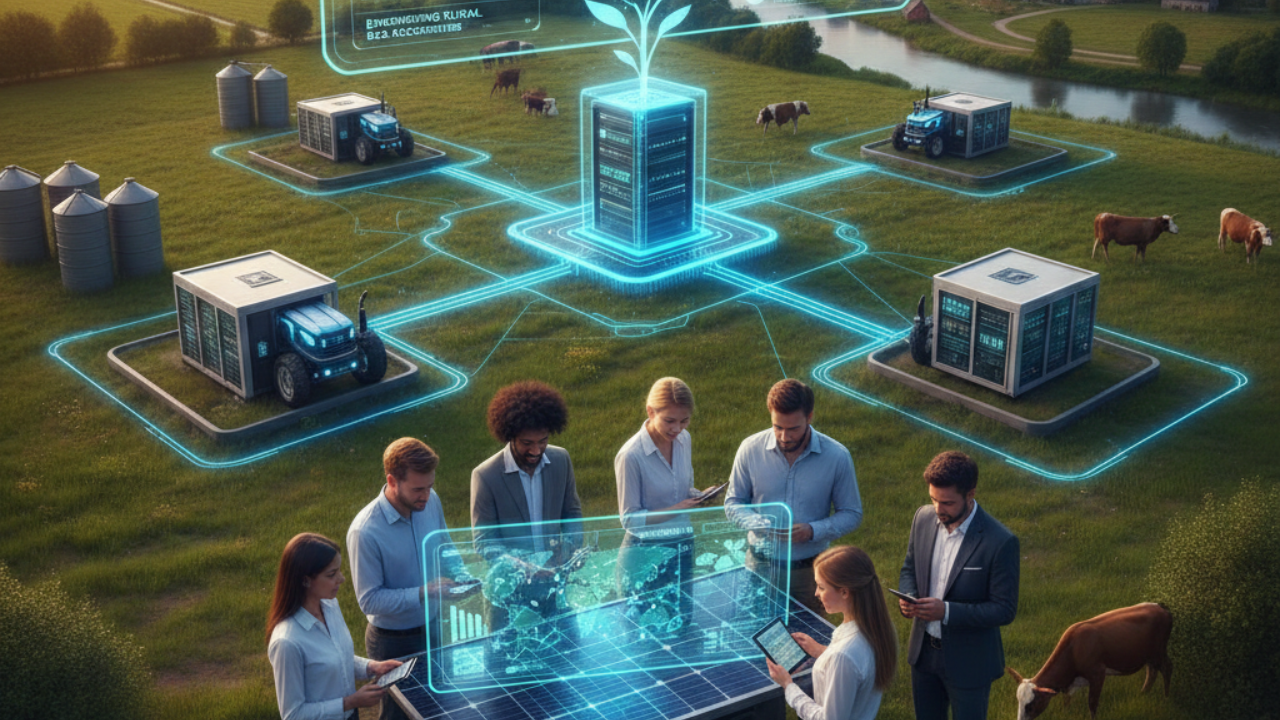
The fast advancement of financial technology is starting to transform the economy of each individual country, and the rural neighborhood is no exception. In most cases in developing places, rural areas have been dysfunctional, having no access to formal financial services, including credit, insurance, and safe payment systems.
Smallholder farmers, especially the rural population, are generally viewed by conventional banks as high risks and costly to cater to. Lack of such a gap has made it easy to generate new ideas among the agritech entrepreneurs. These companies use their farming knowledge and online financial alternatives to reinvent the utilization of money in the rural regions.
Having changed the way farmers are getting money, managing hazards, and engaging in the larger economy, these businesses are using technology, data, and new kinds of business. Agri fintech firms deal with the overlapping of technology in agriculture and finance. They offer customized solutions that allow the people in the rural environment to survive the challenges that they face in their daily lives.
The Fintech Solutions operations in rural areas
The main purpose of the fintech in rural environments is to fill a gap between the group of the population having no access to the traditional financial institutions and the one having access to them. The rural areas lack many real bank branches and thus the majority of the farmers are left with no choice but to borrow money at exorbitant interest rates charged by individuals.
Fintech services are solving this problem because they can provide financial services using mobile phones and digital applications, which implies that they are not so reliant on physical infrastructure. Agri fintech businesses can also access credit products easily and are also based on the agriculture cycles as opposed to strict repayment times.
These systems are more realistic and user-friendly to farmers in regard to financial facility, since they pay loans in regard to planting and harvesting. The digital wallets and mobile payment systems make it even easier to save money safely, paid immediately, and able to buy without necessarily having to travel long distances to do so, as people remote places do.
The largest Fintech Revolution in the money-making process worldwide
Finance is changing with fintech, which is changing the way services offered as well as rated and grown. Fintech providers depend on an entire plethora of data to determine the level of trust, such as transaction history, cell phone activities, satellite anatomy, and even weather conditions. This is unlike the traditional banks, who rely on the collateral and credit history to a large extent.
The transition is specifically necessary for those people who dwell in rural areas and do not always have appropriate financial records. Agri fintech business change is one such change in which companies use data-based algorithms to minimize the risks of financing at the cost of more individuals. The speeds of the loan approvals accelerated by the automated credit scoring systems.
Which minimizes the costs of operating and allows the interest rates to be competitive. Due to that, more openness and better work of financial services exist. Fintech also is making financial transactions more responsible and opening them. Digital records minimize the possibility of fraud and mismanagement taking place and this is good for both the service provider and users.
The intention of the New Technology in the development of the rural areas
Technology is one of the key areas of fintech solutions performance in the rural setting. Especially mobile technology has become an effective way through which farmers can have access to financial services. Vodafone has developed simple smartphones and feature phones that enable people in the most rural areas to access mobile banking, make electronic payments, and get financial notifications.
Agri fintech businesses also use the latest technology, including blockchain, artificial intelligence, and the Internet of Things. AI-based analytics can help you know the yield of your crops and the risks. Blockchain makes it more open in terms of financing and insurance claims within the supply chain. These machines ease a situation and make the banking systems in the rural areas have confidence.
The other non-financial services that usually offered through digital platforms include weather forecasts, prices on the market, and assistance to the farms. This holistic strategy helps farmers to make a choice and achieve more. The use of technology in the day-to-day farming sector makes financial services more effective and the rural areas developed in the long-term perspective.
Future of Change in Rural Financials
The emergence of agri-fintech firms would signify a bright future of rural finance. Such firms are in the right place to promote financial inclusion and value addition of agriculture due to cheaper and accessible technology. This would be beneficial to them, particularly in dealing with rural problems, since they can customize solutions to suit the needs of the locals.
Last but not least, through the introduction of agriculture in ways that are friendly to the environment, the rural places can be even further fortified as regards to the future. The further popularity of climate-smart financing, parametric insurance, and the green investment models hoped for.
These will help the farmers to survive the changes in the climate and economy. Agri fintech does not merely transform the principles of rural finance functioning but also the role of farmers as the subject of an economically integrated and associated economy.