

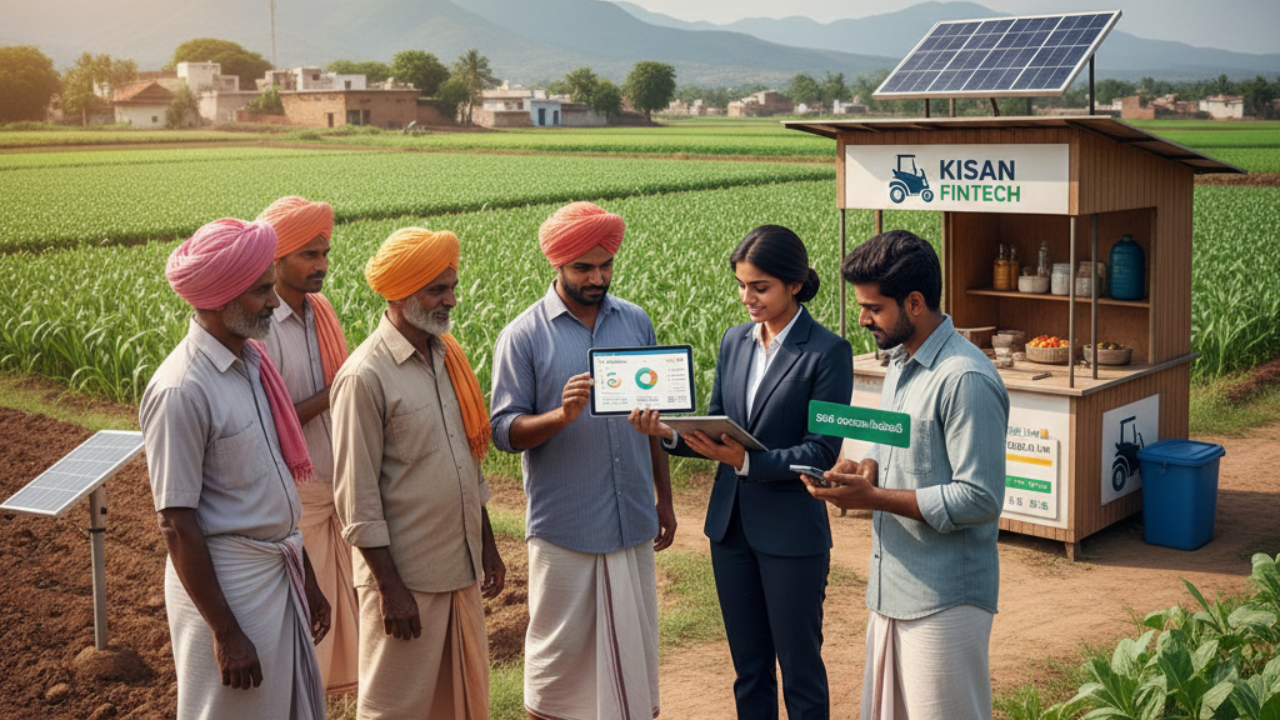
Rural Fintech Financing for Farmers. Numerous farmers in the rural areas have had a long history of being unable to obtain loans. The traditional banks are typically ineffective for the rural people as a result of costly operations, availability, and dangers that people consider as related to agricultural activities. It is because of this factor that not every farmer is accessing formal financial services or is underbanked.
It would be more challenging to invest in productivity, technology, and sustainable practice. In the last couple of years, rural fintech finance has become a paradigm shift in the way farmers would get money and the way farmers would be able to manage their financial requirements. Rural fintech is the use of digital financial technologies, which are aimed at meeting the needs of rural inhabitants.
Some of the ways through which the fintech companies help farmers overcome the age-old financial challenges include mobile platforms, databases, and new models on loans. These emerging ideologies are not just making money more accessible, but rural economies are becoming stronger and the agricultural sector more stable.
The Financial Inclusion Condition in the Rural Agricultural Communities
The contribution of the farmers to the food security and economic stability is of great importance and most of them are unable to use banking services because of the structural challenge. Most of the smallholder farmers do not have collateral or official documents of income and credit history that the conventional banks need.
There was no correlation, and hence farmers had to resort to the informal lenders in the past due to the exorbitant rates of loans and absence of any security. Rural fintech financing helps address these diversions by providing more convenient financial products, which are more focused on addressing the needs of farmers.
The digital lending websites look at the history of transactions of farmers, their crop cycle, and satellite and weather patterns to make decisions. This strategy enables fintechs to assess risk more effectively, although it continues to lend to farmers who otherwise would not have gotten loans. The financial technologies involved are such that the number of people accessing loans increases, including farmers.
How Fintech Platforms are helping farmers to raise funds
Among the most attractive features of the technology, the fact that rural fintech simplifies the procedure of acquiring farm loans is not the least. The mobile applications and online interfaces allow agricultural workers to borrow money without going to a branch of a bank to obtain a loan and fill in complicated forms. The loans are usually quicker in approvals and transfer the money directly to digital wallets or bank accounts.
Fintech also creates the repayment schemes, which are in synchronization with farming cycles. A few of them have the schedules of repayment in terms of seasons or harvests rather than in the form of monthly payments. This is useful in paying off the debts at such times when there is no harvest. This is due to the fact that farmers have easy access to loans and can pay them back through this flexibility.
Loans are not the only thing that Fintech companies are conducting. They also offer savings accounts, online payment, and money transfer. These tools enable the farmer to better regulate his cash flow and use less cash and develop a financial history that would enable him/her to borrow later.
The Technology play in New Ideas in Agricultural Finance
Rural financial fintech is technological. One of the devices that have provided access to financial services to the farmers in the remote areas is mobile connectivity, which has achieved through low-cost smartphones. Mobile-based solutions can still be able to provide banking, payments, and insurance services in a fast and convenient manner even in the areas where infrastructure systems are poor.
Fintech can do a lot more with the help of the most recent technology, including machine learning and artificial intelligence. These instruments analyze high amounts of information to forecast the extent of riskiness of a loan, how the optimal price of a loan determined and how to detect fraud. This will make sure that farmers will enjoy higher interest rates and tailored financial products.
Contrary to agricultural financing, blockchain technology is becoming a growing trend when it comes to making things transparent and easier to track. Smart contracts can streamline the loan issuing and loan repayment procedure, and consistent records may get farmers, lenders, and supply chain partners more eager to place their trust in each other.
The Rural Agricultural Economic Emerging role of Fintech
More and more people are beginning to see rural fintech funding as a factor in promoting fair economic growth. The fintech platforms would enable farmers to access the agricultural value chains better, as it would streamline the access to financing and other financial solutions. This kind of integration enhances the bonding that exists among farmers, agribusinesses, and markets.
As more people turn to fintech, the economy of rural areas is getting more investments and becoming more productive, as well as providing more job opportunities. The farmers are in a better position to adapt to the changes made in the economy and the environment and this renders them economically stable. The transformation makes the rural locations more successful in continuing.