

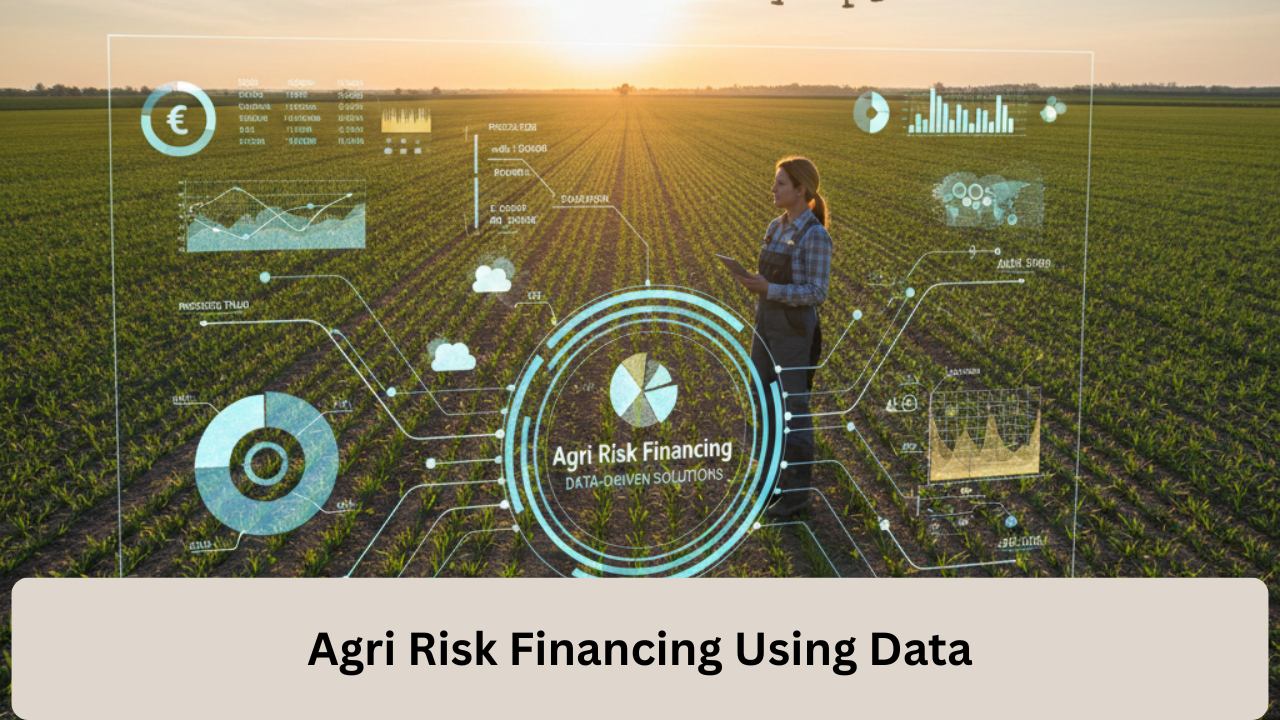
One of the most threatening faces of the world economy is agriculture. Farmers have to struggle with many factors that may not work like expected, like climatic changes, weather, rising and falling prices of products, pests, and supply chains. It is not only that the risks limit the financial stability of the farms, but it is also because the risks make banks less inclined to lend money to the industry.
Agri-risk financing, which is data-driven, has become a viable option over the last few years that has assisted lenders, insurers, and policymakers in making better assessments, pricing, and management of agricultural risks. Data utilization can result in financial systems that are more transparent, robust, and sustainable between the small and large farmers.
Conventional approaches usually adhered to when financing agriculture based on collateral, historical financial reports, and subjective risk analysis. Nevertheless, the smallholder farmers do not have records and assets and this is what makes them look at a high risk when they may be highly productive. One way of bridging this gap is data-based agribusiness risk financing: technology and analytics.
Agricultural Risk in the Contemporary world
Agricultural risks are interconnected, and there many varieties of agricultural risks. Predictable weather conditions, soil erosion, and biological risks like pests and diseases are some of the production risks. The threats posed by the market fluctuating prices, fluctuating demand, and the way international trade is conducted.
The interest rates, currency variations, and seasonal revenues that are not in tandem with the cash flow may pose a threat to your budget as well. In the modern world, climate change and uncertainties across the globe contribute to the aggravation of hazards. The traditional approaches to risk minimization usually slow and reactionary and only help to reduce the risks when they have already generated.
On the other hand, data-based methods enable the stakeholders to have a glimpse of the risks the future, plan how they address them and come up with financing products that anchored to what on the ground.
The Importance of Data in financing the risks of agriculture
The most important factor would be the data that agri-risk financing would work well with. It allows banks and other financial institutions to abandon the need to make assumption-based lending decisions and adopt fact-based decision-making. Many forms of data now incorporated a bid to come up with more powerful and less ambiguous models of agricultural finance.
Majority of the information about crop health, land use, and crop production relayed by remote sensing satellite images and data. The weather data can help us to make an assumption regarding when to anticipate droughts, floods, or extremely hot or cold weather that can lead to a shift in the productivity.
The records that include the schedules of planting, input used, and harvests at the farm level give a good understanding of the performance of the farm. When all these sources of data added, it produces a complete risk analysis of a single farm or region. The lenders can make more correct assumptions about whether one would repay the loan or not, and the insurers can come up with more precise.
Credit Assessment to Farmers on the basis of Data
One of the most important uses of agro risk financing data is the estimation of the credit to be provided. Generally, the farmers not taken into consideration the regular algorithms of credit scores due to a lack of a lot of formal financial history. It defeated by the models based on data from other data.
In order to consider the case of digital payment transaction data, purchase data of the suppliers’ input and sales data of the buyers of the produce may show that a business is making money and can stay in business. The size of a piece of land checked with the help of satellite and the crop cycles defined. The danger of production could noticed by weather data.
The lessons also help the lenders to provide loans with conditions that will best suit the farmers, like seasonal payments. Farmers get to borrow at ease and lenders have less risk on the loan since there is less risk of losing the loan. This benefit will encourage more people to use official financial systems and this will eventually lead to the development of agriculture in the long run.
The Future of Agricultural Finance Lighted by Data
Because of the ever-increasing technology, the amount of data will grow larger in relation to financing agricultural risks. The risks will analyzed using artificial intelligence, machine learning, and predictive analytics, and the products will customized even more precisely.
The flows of real-time data will introduce the possibility to provide dynamic financing solutions, which will adapt to the conditions of the farming cycle. Lastly, there is the shift towards using the data in financing the agricultural risks, which is a step towards better, more equal, and more stable agricultural finance programs.
Financial products and the risks of agriculture are becoming more integrated to provide a more secure environment to access food via data-driven methods, benefiting the farmers, safeguarding the lenders, and making the world a risk-free place to get food. In a world that is increasingly less certain, things are not only a tool; they are a significant element of sustainable agricultural finance.