

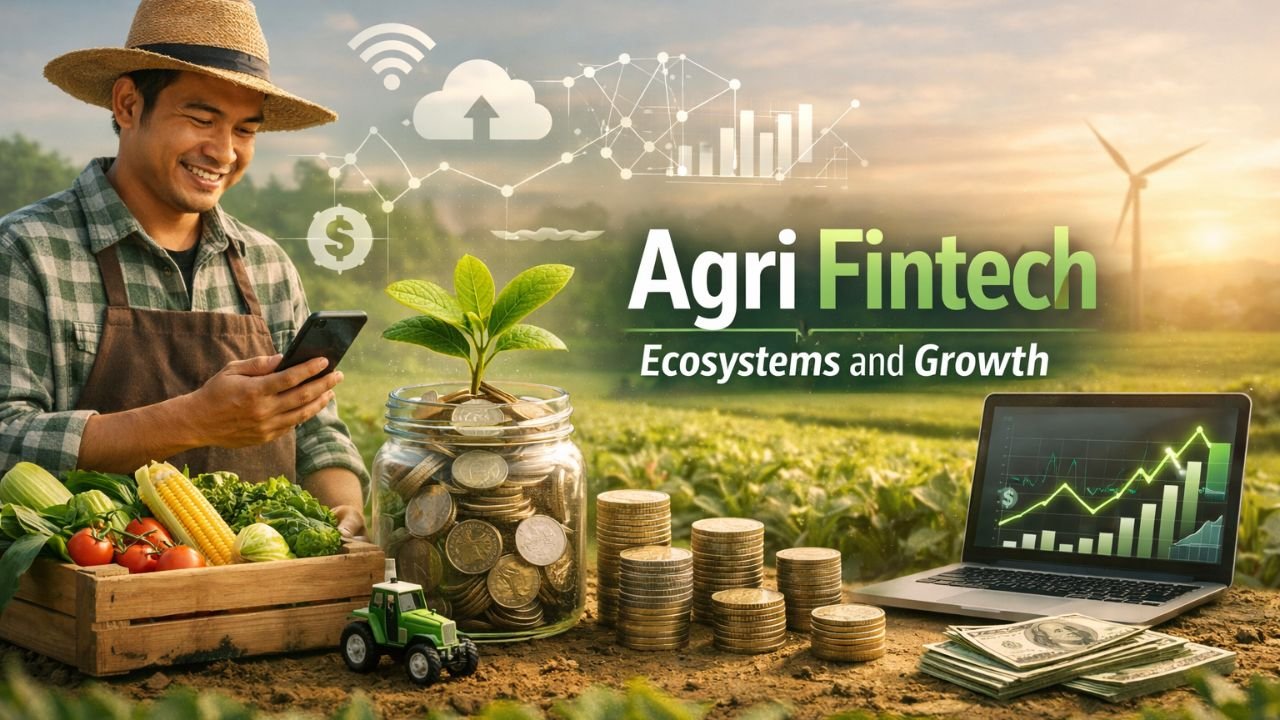
The combination of finance, technology, and data is driving a radical digital transformation of agriculture. This change is based on changes in agrifintech ecosystems. They consist of digital platform networks, banks, agribusinesses, and technology supplier networks working together to create tailored financial services for farmers and agricultural value chains.
Not only do these ecosystems allow farmers to easily access loans, but they also enhance faster productivity, resilience, and inclusive development in the agricultural sector at large since they exist. Based on this premise, agri-fintech ecosystems utilize real-time data to enhance more operative and accurate financial services.
Using satellite images, IoT sensors, weather forecasts, and transaction data, these ecosystems can predict risks and efficiently provide loans. This objective-based strategy minimizes the uncertainty for both lenders and farmers, and this allows access to working capital, crop insurance, and investment opportunities on time.
Knowledge on Agri Fintech Ecosystems
Agriculture specifically employs agri fintech, a type of financial technology. Unlike conventional financial services, agri fintech applications are tailored to the specific realities of farming, which is seasonal and carries inherent risks that not easily generalizable.
Agricultural fintech ecosystems unite a number of people and businesses, such as farmers, banks, microfinance institutions, insurers, input suppliers, produce buyers, satellite data, mobile network providers, and governmental organizations.
The ecosystems work with online services that integrate services like payment, credit, savings, insurance, and access to the market. The players in the ecosystem also minimize transaction costs, make it easier to evaluate the risks they face, and add value to all the players involved with the dissemination of information and making sure that the parties concerned have shared goals.
What makes Agri Fintech grow?
Both agri-fintech ecosystems have emerged quickly due to a number of variables. The first is that a good proportion of the populace connect to the mobile telephones and the internet using their telephone even in the very rural regions. Through this connection, digital onboarding can take place, and payments made in mobile and real-time communication with farmers.
Second, improvements in remote sensing, artificial intelligence (AI), and data analytics have simplified the process of identifying farming risks. Fintech companies can use satellite images, meteorological data, and farm transaction histories to design new credit score models of farmers with no formal financial histories that allow them to provide and extend credit to farmers.
Third, the increasing need for food and the problem of climate change have predetermined the fact that more efficient and stronger food production systems will be required. Governments, investors, and development groups are increasingly considering agri fintech as an important part of the development of sustainable agricultural systems and the growth of the rural economy.
Key Building Blocks of Agri Fintech Ecosystems
A successful agro fintech ecosystem typically consists of various components interacting with each other. Digital payments enable farmers to paid and to spend the money they have received as inputs, in mobile wallets, or in digital bank accounts. The payment rails leave behind a history of transactions that could used as valuable data by other financial services.
Digital credit is another valuable component. Growers get inputs, working capital, and asset loans pegged to harvest time through agri fintech sites. Conditions of a loan are generally left to be at the mercy of the time when the crops likely to harvested, and those installments could be paid automatically in mobile payment forms or even the sales of the crops.
Farmers and lenders use insurance solutions, which are index-based, to mitigate climate and yield risk. Through solutions, meteorological or satellite information can automatically pay out at a reduced cost and with reduced delays as compared to the traditional claims processes. Market relationships are what round off the ecosystem since farmers directly relate with buyers, processors, and exporters.
Agri Fintech Ecosystems and Future
There is a higher likelihood that agricultural fintechs will become more interlocked and intelligent in the future. Fintech and AgTech will converge with each other, and this will lead to more customized financial products. For example, agricultural machinery engineering, IoT, and weather information are key components. The open APIs and platforms will make ecosystems work together, and such collaboration will lead to a higher level of scale and efficiency.
Those ecosystems can not only turn agriculture into a risky business but also a data-driven and long-term investable industry by bringing finance, technology, and the realities of farming together. Continuing this pattern, it is possible to predict that predictive analytics and AI-driven insights are going to become even more core to agrifintech ecosystems.
These technologies will help lenders and investors make more precise and timely decisions by analyzing the farm performance of past years, weather, demand, and efficiency of the inputs. In its turn, this will allow farmers to access more advanced recommendations, which will help them maximize the crop yields, minimize the wastage of inputs, and increase the profitability of their farms overall.