

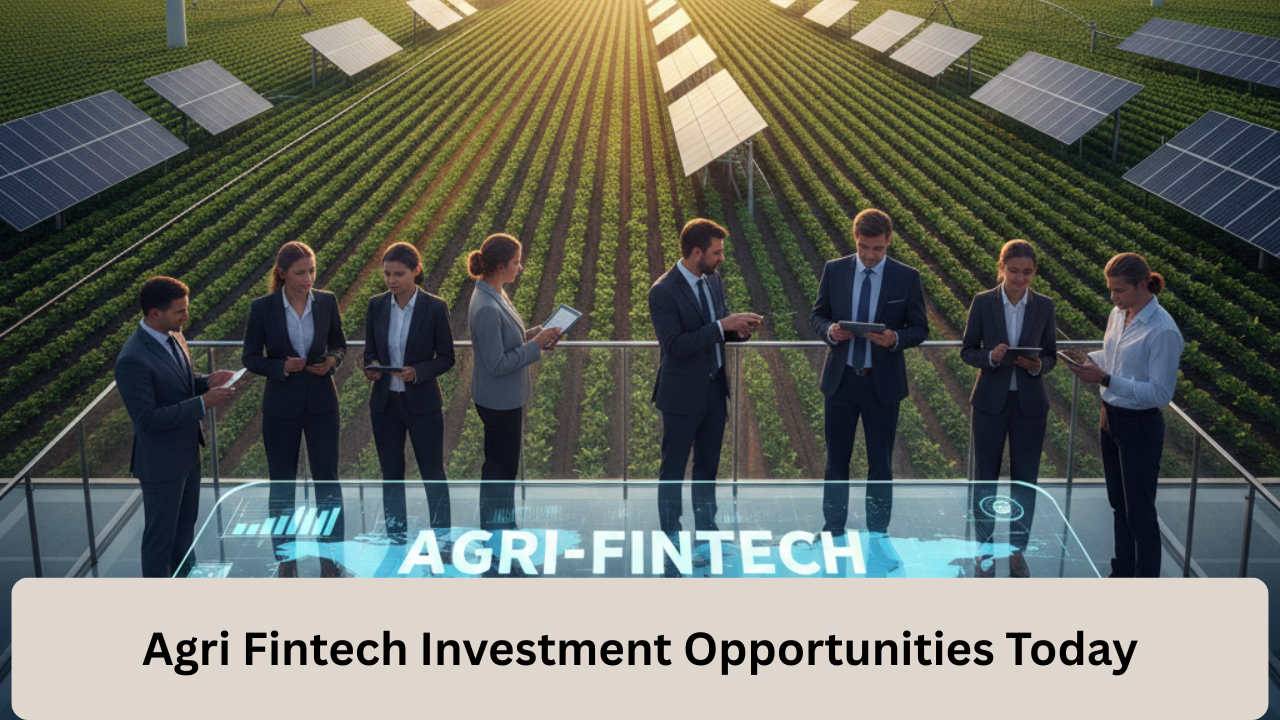
The digital innovation and financial technology are radically changing the global agricultural business. Agri fintech is becoming a powerful tool to draw farmers, banks, and investors nearer as food security, climate change, and rural financial inclusion continue to grow in importance on the global level. Agri fintech is increasing the scope of investment opportunities and completely transforming the agricultural finance sector.
The whole value chain is to be more fruitful, robust, and sustainable with the use of technology to modernize agricultural finance. Agri fintech the term that is used to refer to the use of financial technology-based solutions that specifically designed for farming and other agricultural fields.
These platforms aim to address long-standing issues such as credit accessibility, insurance, fluctuating prices, and inadequate supply chains. Most of the developing economies have a big agricultural sector, which remains a big part of their economy and thus agro fintech investments not only considered a good business but also good for society too.
The technological changes currently occurring in FinTech are significantly impacting the agricultural industry.
Digital payments are only a fraction of the impact that fintech has had in the agricultural sector. One of the major benefits is that it helps small farmers access loans very easily. The majority of these farmers cannot take loans in the traditional banks, as they have no collateral or even a credit record.
FIntech applications may use all types of data, including satellite images, mobile transaction history, and statistics of agricultural produce, to have a more precise idea of whether an individual will repay a loan. Digital lending can help farmers to receive operating capital in the form of seeds, fertilizers, and equipment within a relatively short duration.
In the meantime, the insurance targeting technology is weather-based insurance products, which insure the farmers against risks related to climate. All this made less uncertain by these new concepts and stable incomes and encourages people to invest in more superior methods of farming. Fintech also opens and makes agricultural supply chains open and efficient.
Defining the most valuable FinTech Companies in the World
Speaking of the biggest fintech company, there is a great deal of divergence depending on the parameters applied to the company, like the value, number of transactions, or geographical areas in which it operates globally. Ant Group, PayPal, Stripe, and Block (formerly Square) are the most prevalent leaders in the sector since they are big and have advanced technology.
These companies not always fully focused on agriculture but the infrastructure in terms of them is highly critical to the operations of agro fintech ecosystems. The agri-fintech sector is one where regional leaders come in. The companies, including Pula, CropIn, AgroStar, and TaniHub, have developed products that directly targeted at the agricultural market, especially in the developing nations.
The platforms serve as a crucial intermediary between farmers and investors, consolidating capital, data analysis, and market access. The appearance of special agri-fintech firms indicator to the investor that the market moving towards specialty services with plenty of opportunities to be developed.
Learning the Five Fundamental “D’s” of FinTech Innovation
When discussing how fintech has evolved over the years, one is likely to mention the so-called five D’s. These are the major aspects that drive innovation in the world.
- The first aspect is digitalization, which refers to the application of digital technology instead of paper and manual processes. This includes the use of farm records in digital form, online loan applications, and mobile-based insurance claims in farming.
- The second is Disruption in which the services offered by the fintech companies are cheaper, easier to acquire, and faster than the services offered by the conventional banks. The agricultural lending process is disrupted by agri fintech companies that bypass long-term approval processes and strict regulations.
- The third D is Democratization, according to which these people, who lack access to financial services, can access the services in a comfortable way. Finitch makes life easier by lowering entry barriers to traditional banking for the small farmers, agribusiness companies, and rural entrepreneurs.
- The fourth step involves making decisions based on data. The fintech systems enhanced with advanced analytics and artificial intelligence to process large volumes of agricultural data. This eases the task of risk assessment, pricing, and differentiation of financial products for the individual customer.
- The fifth D is decentralization, which tends to facilitated by decentralized blockchain and distributed ledger technologies. The strategy will be the opening of the scene, decreasing middle people, and promoting trust among the people in the agricultural trade.
The Future of Growth in Fintech in Agri
The future of agriculture in the global context would further depend on Agronatural fintech even more in the future. Financial systems will become more accurate and will be able to conduct more transactions as the technologies get better, i.e., blockchain, artificial intelligence, and the Internet of Things (IoT). This revolution will make farmers more part of world value chains in addition to being more productive and sustainable.
Investors can donate money not only to individual enterprises but also to ecosystems that offer some sort of finance, integration of technology, and agriculture. It can invest in the long run by investing in the future and creating a stronger and more inclusive food system for the world.