

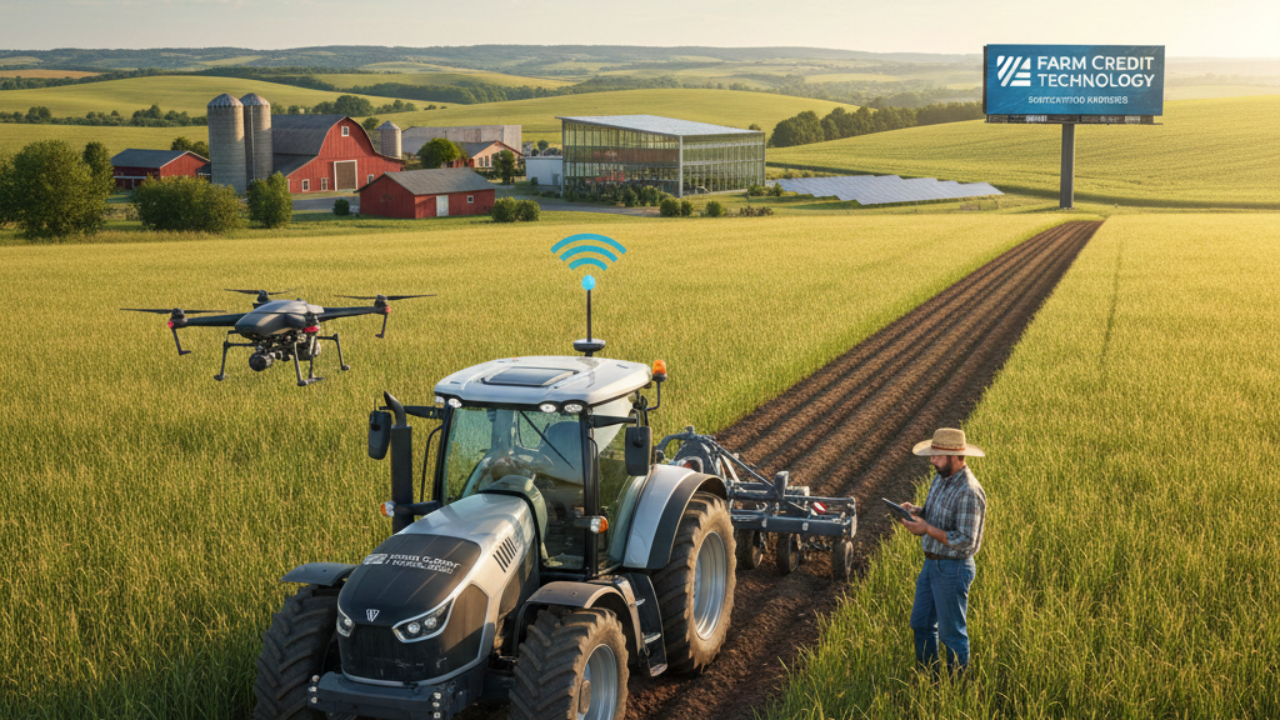
Farm Credit Technology Supporting Farmers. The digital agricultural sector revolution and financial modernization are significantly transforming the agricultural sector. Among the problems that farmers are struggling with are climate change, fluctuating commodity prices, and rising production costs. Technology has also emerged as an important tool for enhancing the productivity and strength of the farms.
At the same time, digital platforms are transforming how people can access farm credit, making the process more transparent, effective, and data-driven. The technologies used on farms and the new methods for obtaining credit are changing how farmers work and invest in the food system, which is becoming increasingly complex.
This development will enable farmers to make better financial decisions grounded on live information and forecasts. Using farm generated data and digital credit analysis, lenders will be better informed on the risks and returns of production. This also eliminates doubts among the two and allows the two to have customized financing solutions that fit planting periods, harvesting seasons.
What are the most Beneficial Technologies for Farmers?
The list of new farming technologies is long, but some are worth mentioning because they can directly and measurably affect farmers’ productivity and income. First in the list are accuracy farming machines.
These consist of GPS-controlled machines, soil sensors, and data analysis systems, which help farmers make the best decisions on when to sow and fertilize their crops and when to water them. Therefore, the application of such inputs enables farmers to save costs, reduce waste, and increase crop yields.
Another consideration is the mobile technology. Smartphones and farm applications will make farmers obtain real-time warnings of the weather, market price, pest notifications, and agronomic recommendations. Mobile access can assist smallholder farmers, particularly in developing regions, by enabling them to make better decisions and overcome the information gaps that previously existed.
The world is transforming farming through the use of technology..
Technology is helping farmers around the world manage local challenges while also connecting them to global markets. In the developed countries, sophisticated analytics and artificial intelligence are used to forecast what will occur to crops, identify diseases at an earlier stage, and streamline the supply chain.
Other sources, like soil, weather, and satellite images, are capable of providing better data to the farmers during the growing period. The effect is also phenomenal in the emerging economies but more transformative on most occasions. Farmers can now access extension services online without the restrictions of geographical borders.
In places where the infrastructure is poor, solar-powered irrigation systems and inexpensive sensors are easing the management of water and the incidences of rain that often falls at unexpected times. Other rising applications of blockchain in farming include enhancing transparency and traceability. Farmers maintain records of transactions and outputs in non-editable ledgers.
What Does credit mean among farmers?
Technology can prove extremely beneficial, but so frequently, it is applied only when people can afford it. Credit is very significant in farming since the farmer can use it to buy seeds, tools, technology, and infrastructure. Owing to the farming nature, the cost comes up before income. Farmers could end up unable to make adequate investments without much-needed credit, and this could adversely affect their productivity and revenue.
We have designed the farmer-friendly finance system. Online banking websites are now trained to consider factors such as satellite photos, transaction history, and mobile device usage patterns when determining a person’s creditworthiness. This particularly disadvantages small farmers, as they often lack sufficient financial records and collateral.
There are also an increasing number of flexible loan opportunities that are likely to make sense in the farming cycles. They are insurance loans, which safeguard the farmers against shocks occasioned by climate change and repayment schemes that follow harvests. In such a development, the farmers will feel less risky about finding out new technology and ways to do things that are eco-friendly.
Developing the future of farmers
The world is experiencing a constant increase in the demand for food, which requires farmers to produce more with fewer resources while facing greater uncertainty. One of the ways to attain this goal may be farm credit technology because it may bring together new ideas, information, and accessible funds. Having the proper equipment and funds, farmers can change at a better pace, produce more, and ensure long-term sustainability.
Finally, technology-based extension of credit to farmers is not just about improving farming. It is everything about giving the rural people more powers, improving food production networks, and making agriculture a viable and sustainable source of livelihood in the future.