

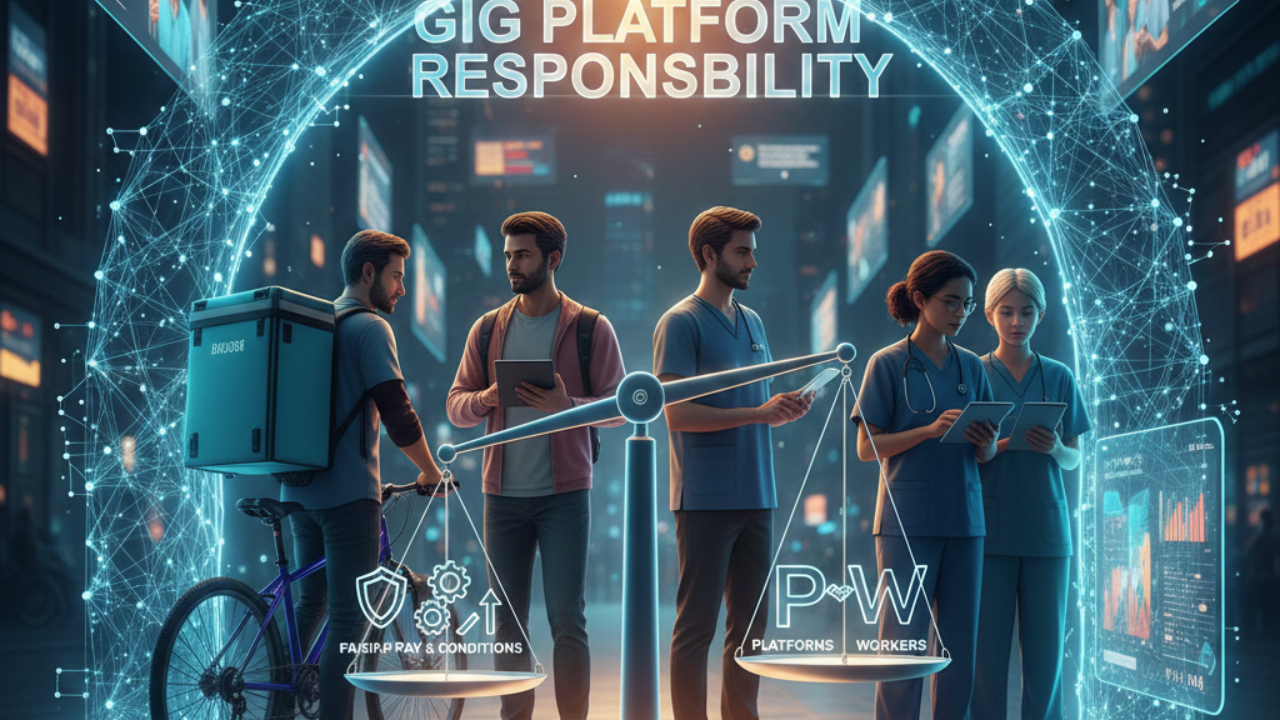
A gig worker refers to a type of worker who has short-term/task-based/freelance jobs typically via online services. Gig workers can choose their tasks, hours, and workload, giving them more freedom than regular employees. People who are looking to generate extra money, start their own business or want a better work-life balance like gig work because it offers them more freedom.
However, when it comes to this flexibility, there are also risks involved. Gig workers are usually responsible for covering the expenses of their own tools, transportation, and other work-related costs. They do not necessarily receive benefits such as health plans, holiday leaves, and pension schemes. So, despite the fact that gig employment would appear to be independent employment, it can also leave these individuals with little protection under the law and a lot of financial insecurity.
What does a gig worker
A gig worker is someone who does short-term, project-based, or freelance work, generally using the internet. Gig workers enjoy more freedom than regular employees because they are free to choose their work, the time they work and the amount of work they do. People who desire to be free, make some extra money, or find ways to combine employment with other personal or professional commitments are attracted to this freedom.
Gig labor has its pros but also its cons. Workers are often left with paying for things like tools and transportation fees and other fees that come with the jobs. They usually don’t have standard perks like health insurance, paid time off, or retirement plans. So, while a gig worker can give you power, it also makes you very vulnerable to legal and financial problems.
What are gig workers and working on a platform
People sometimes use the terms “gig workers” and “platform-based workers” to mean the same thing; however, there are some differences between them. Gig workers are individuals who work in short-term, freelance, or task-based work, whether or not they use digital platforms to attract clients. Platform-based workers make use of online platforms or apps to find work, get paid, and talk to clients.
A platform-based worker is someone who obtains work through an online marketplace, such as a freelance web developer. A gig worker, on the other hand, is someone who receives work via personal referrals, such as a painter. Both have problems, including changing income and not enough legal protections. But platform-based workers are also subject to algorithmic management, platform rules, and computerized grading systems, which may impact their salary and job opportunities.
What is the impact of gig work on workers
There are some good and bad things about the gig economy. On the plus side, it allows people to have a variety of sources of income and learn new skills, as well as keep their schedules flexible. Many employees enjoy having the ability to select their very own projects, as well as balance their personal and work obligations.
But gig labor can be risky. The demand is not steady, and because the platform determines the pay rates, pay may change. Workers usually lack access to social protections such as healthcare, paid time off, and retirement benefits. Another thing to consider for occupations that require travel or interaction with customers, such as delivery drivers and ride-share drivers, is their physical safety.
These facts demonstrate how important it is for platforms to be responsible. Companies that help people find gig employment are not just middlemen, though; they have an impact on the safety, financial stability, and long-term career growth of workers. So, platforms need to develop rules that deal with these dangers but still be able to run their businesses.
Health, Safety, and financial Protections
Platforms have the big job of ensuring that gig workers are safe and healthy. Road safety, emergency backup, and desired equipment are very important for jobs such as ride-sharing and delivery jobs. Some platforms provide safety training, insurance, or assistance on demand (although these precautions aren’t always the same and/or required). Standardized safety procedures would reduce hazards and make the workplace safer.
Another important element is financial security. Gig workers may struggle to manage their money because their income is sometimes changing from week to week. Platforms can help by suggesting things like microinsurance, ways to smooth out income or payments to social security programs. Also, workers require fair and open payment policies and pay on time to retain their trust and monetary security.
Benefiting employees and permanent development
The work of people has been changed by the gig platforms that offer people more flexible work and methods of earning money. However, this paradigm exposes the workers to risk without the cover. The platforms must take large roles, including health and safety, financial stability, skill development, fair payment, and moral responsibility.
Gig platforms have the potential to make the ecosystem fair and safer by actively employing the workers. Development of policies to protect workers and at the same time offer flexibility done jointly by the governments and policymakers. Ethical practices, collaborative policy development, and co-invention of new concepts can help gig platforms build trust, productivity, and long-term growth, prioritizing workers. This is great for workers and the economy in general.