

You work in the corner cafe, you work your own hours and you are building a client base that you really like. The gig economy is what it is offering: a work world that is free and flexible. Imagine now that you wake up with a prick in your back. You have to visit a doctor, but you do not know whether you should or not. Unless you have health insurance through your employment, the appointment may cost you hundreds of dollars.
You decide to have patience in hope that it is only a strain. This is how the gig economy works also. This happens to millions of ride-share drivers, delivery people, consultants, and content creators on a daily basis. An increasing amount of autonomous, project-based work is redefining the previous work world of 9 to 5 with its fixed hours and benefits. It is a revolution, which makes people very free, but in exchange, they are not that safe: they have no net.
Flexibility: Two Sides of the Coin
It is hard to disagree that it is attractive. Anything can sold anywhere using a smartphone and dexterity. You are free to choose your own projects, be your own boss and earn money in several ways. No wonder over 30 percent of the global labor force are currently engaged some form of gig jobs. This idea allows parents to take them to school performances, children to finance their own education, and artists to pursue their interests in their own ways.
This self-directed way only like walking on a tightrope and not having the safety harnesses the majority of employees are accustomed to. Working as an “independent contractor,” the rules are different. The regulations that expected to protect employees, such as ensuring that they receive a minimum wage, unemployment insurance, and health insurance via their workplace, do not always work. There is true flexibility, but there is immense risk.
The talk is already changing. Legislation in such places as France and Spain is acknowledging the rights of platform workers to pay social security payments. The debate on categorizing the workers in California has compelled the people to be realistic. New schemes even experimented with by the individual organizations. Indicatively, Uber and DoorDash have attempted to provide workers with health insurance and accident insurance.
Human Cost of Working in the Gaps
It is time to cease the discourse on the concepts and begin discussing the tangible issues that the workers of the gig economy deal with on a daily basis.
- The Healthcare Dilemma: As a paid employee, getting health insurance usually a box that is simply to checked when one begins to work. The gig worker must puzzle with a hard and costly puzzle. In the case of the individual market, you might forced to either get full-blown plans that prove too costly or bare-bones insurance with huge deductibles.
- The Rollercoaster of Income: The income of a Gig is subject to ups and downs as compared to a consistent paycheck. One month might have eight projects and the other one might be inactive.
- The Retirement Black Hole: When you are scurrying to make this month’s rent, you know that you are only looking 30 or 40 years into the future, and it can be a luxury. In case you do not have a 401(k) through your employment and your company does not match your deposits, then you have to save.
New Safety Net: Future-Work Solutions
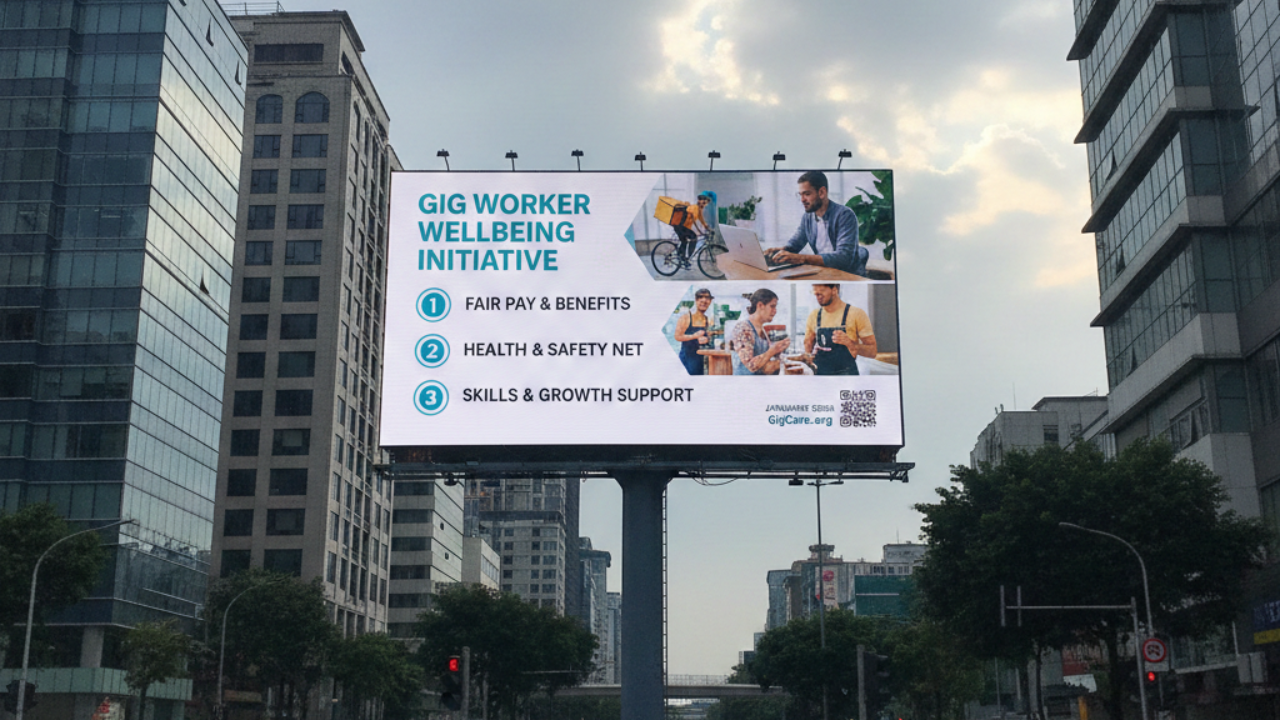
It is not that it is necessary to restore these issues by returning gig labor to the conventional corporate box. The concept is to establish a new, contemporary safety net that ensures the independence that gig workers take pride in but at the same time provides everyone with the security they need. This requires all to collaborate, which is like a three-legged stool with the governments, private platforms, and workers serving as the legs.
Consider having a health insurance plan or a retirement account that you own, regardless of what app you drive or what client you design. The most significant aspect of a new welfare system is these so-called portable benefits. Platforms can contribute a small percentage of their own gigs to an individual benefits fund of a worker.
- Income Stabilization Mechanisms: We must have new mechanisms of dealing with money that will assist us in coming out of the income rollercoaster. This can be in the form of an emergency savings deposit on the site, the facility to borrow short-term loans when things are not good or even earnings insurance that compensates for loss of income in unforeseen depressions.
- Availability of Advocacy and Upskilling: Gig workers should have one location where they can seek legal assistance and resolve any conflict. Moreover, people should given an opportunity to continue learning because it is the most effective method of helping them in the long run. Food delivery drivers can receive training to become logistics coordinators, while writers can learn SEO through programs that offer low-cost and specialized training.
Ensuring that gig workers have a long and safe future
The gig economy is full of good things, yet its advantages should be accompanied with safeguards that would protect the workers. The gig workers require complete programs that can provide them with financial stability, access to health care, and the ability to acquire new skills to do very well.
Investing in welfare programs will help policymakers and platforms to make the gig economy safer, more secure, and more sustainable to workers. It will ensure that flexible job is not ruled out in the future. Additionally, such programs have the potential to build trust between people and platforms, decrease turnover and promote general productivity.
By mitigating the vulnerable aspects of the gig work, these initiatives can make their workers concentrate on their jobs and do not fear about losing money or getting sick. In the long run, a broad welfare program is beneficial to both the workers, the platforms, and the economy as a whole, establishing a stronger and healthier system of gigs in the future.