

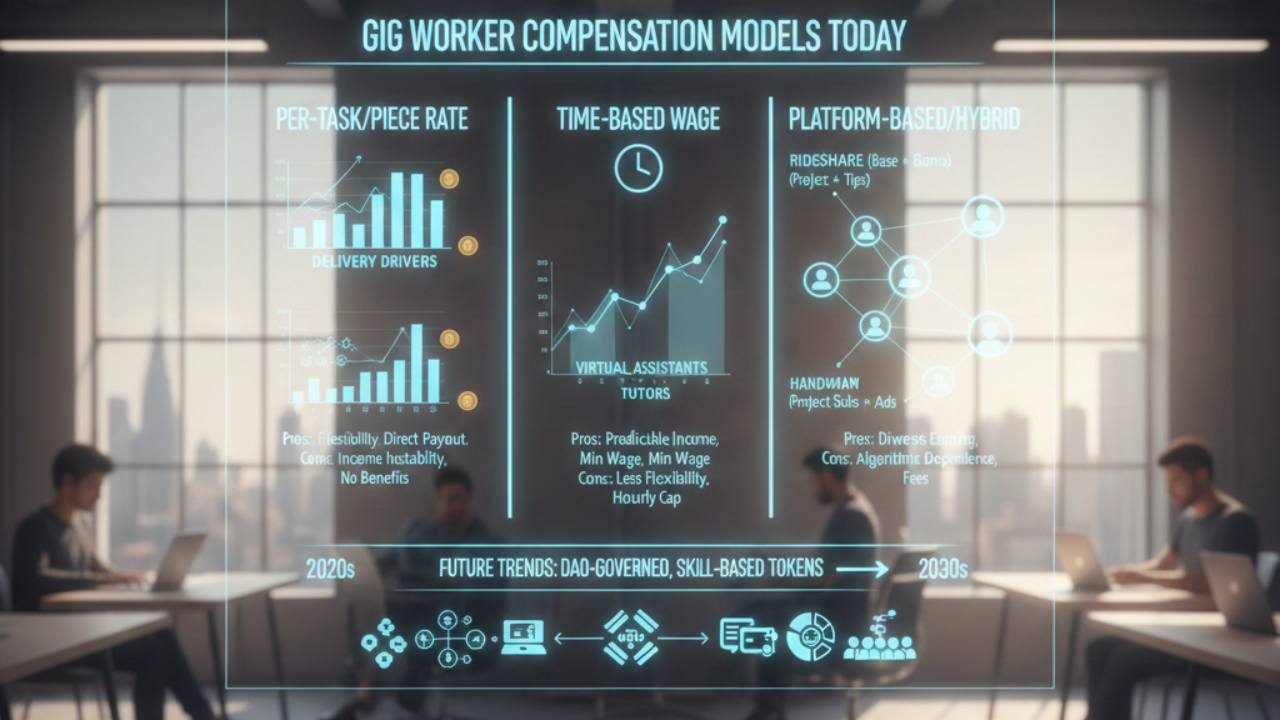
The gig economy has transformed the way people earn money, labor, and utilize digital platforms in recent years. It has turned into one of the most significant means for people to work. Gig workers, that is, drivers, passengers, those who deliver items, those who design graphics or do little tasks online, receive remunerations in rather different ways compared to individuals who are working full time. With the rise of gig platforms, the workers, politicians, and employers increasingly interested.
In learning about how pay models work and the impact of pay models on economic stability. The payment system the gig economy by far more varied based on the nature of the platform and the kind of service being offered. As compared to the conventional wage systems where workers receive a set salary at the end of every month, gig workers are commonly paid on a task, delivery, ride, or project basis. This system is flexible and independent but there is also the problem of income predictability and long-term financial planning.
Along with the ongoing influence of digital platforms on modern labor relations, the argument about adequate remuneration has become more heated. Most gig workers exposed to unsteady pay and bonuses, different bonuses, and algorithmic job assignments, all of which directly affect their ability to earn. These aspects render the necessity of workers to informed about the way compensation models work, whereas policymakers focus on providing transparency.
What is Comprising the Gig Work Structure
The gig work system refers to a system where individuals employed on a temporary, or project-based, or task system rather than a full-time system. In contrast to ordinary employees, who normally receive remunerations after one month and benefits, gig workers receive payments after every task, project, or assignment they complete. In this model, a worker has high levels of freedom since they are able to choose when, where, and how much they would like to work.
The framework made possible by the use of digital platforms such as ride-hailing applications, freelance marketplaces, and delivery services. The customers can find service providers easily using these platforms. They normally adopt algorithmic assignment systems to partition tasks.
However, this system shifts much of the responsibility from the companies to the employees. Gig workers usually forced to finance their education, travel, and even insurance. The freedom to make your own schedule good, and since the benefits are not standardized, it difficult to know what is fair and what not.
How will the gig workers be treated in 2025
The Gig Workers Legislation 2025 or Gig Workers Bill 2025 a body of regulations that have proposed several locations in an attempt to address long-standing concerns of worker protection, benefits, and pay transparency. The primary objective of the bill is to render clear the regulations on the categorization of gig workers, the responsibility of platforms, and the minimum quality of treatment. The information might be varied in every nation.
A primary aim of the law will be to clarify the border that distinguishes between the independent contractors and employees. The measure establishes hybrid worker type or mobile benefits programs, which ensure that gig workers can access protection without sacrificing their flexibility.
The Gig Workers Bill 2025 has some of the following common sections:
- Minimum wage requirements during work.
- Unambiguous algorithmic decision-making.
- Accidents or injuries are to insured.
- Inclusions to pensions or social security.
- Evident means through which workers can resolve disputes and platforms.
The bill has incorporated as a bigger global initiative to amend labor regulations line with the rise digital platforms. In the case of platforms, the regulations imply a change in the functioning of the platforms, as well as the way of dealing with money. The law provides better conditions to the workers, equal payments, and more predictable working conditions.
What is the Occupational wage of Gig Workers
The wages paid to gig workers are quite different in every industry, region, demand, and policy of the platform. Since gig workers are usually paid on a task or project basis, earnings may high or very low depending on the time of day—during high hours or when the demand low.
Gig worker compensation determined by a number of factors:
Nature of the Platform
Taxi drivers can earn by the kilometer, minute, or dynamic pricing. Base pay can offered to delivery workers with incentives. Creative sites tend to offer their services at prices set by their freelancers, but there is a competitive influence.
Time and Location
Big cities that have high demand tend to have high earning opportunities. Burst times—lunch rush, evenings, and weekends are usually more profitable. On the other hand, the low-demand hours in rural areas can lead to low wages.
Platform Fees and Expenses
The service fees at most gig platforms are between 10 and 30. The workers should also consider:
- Fuel costs
- Vehicle maintenance
- Internet and device costs.
- Insurance
- Taxes
Securing Equitable Profits and Sustainability in the Long Term
The gig economy is still developing and it presents both opportunities as well as challenges to the contemporary worker. The models on compensation have continued to play a key role in this development and have defined livelihoods and the financial insecurity of workers. With policies such as the Gig Workers Bill 2025 introduced in more places, the platforms are being pushed towards more transparency, fair labor standards, and better protection of workers.
The environment in which employees will feel valued, safe, and capable of ensuring sustainable development can created with the help of well-established payment systems, equal incentives, clear algorithms, and available benefits. A carefully designed phased approach and collaboration should transform the future of gig work into a flexible one that would not jeopardize fairness and security.