

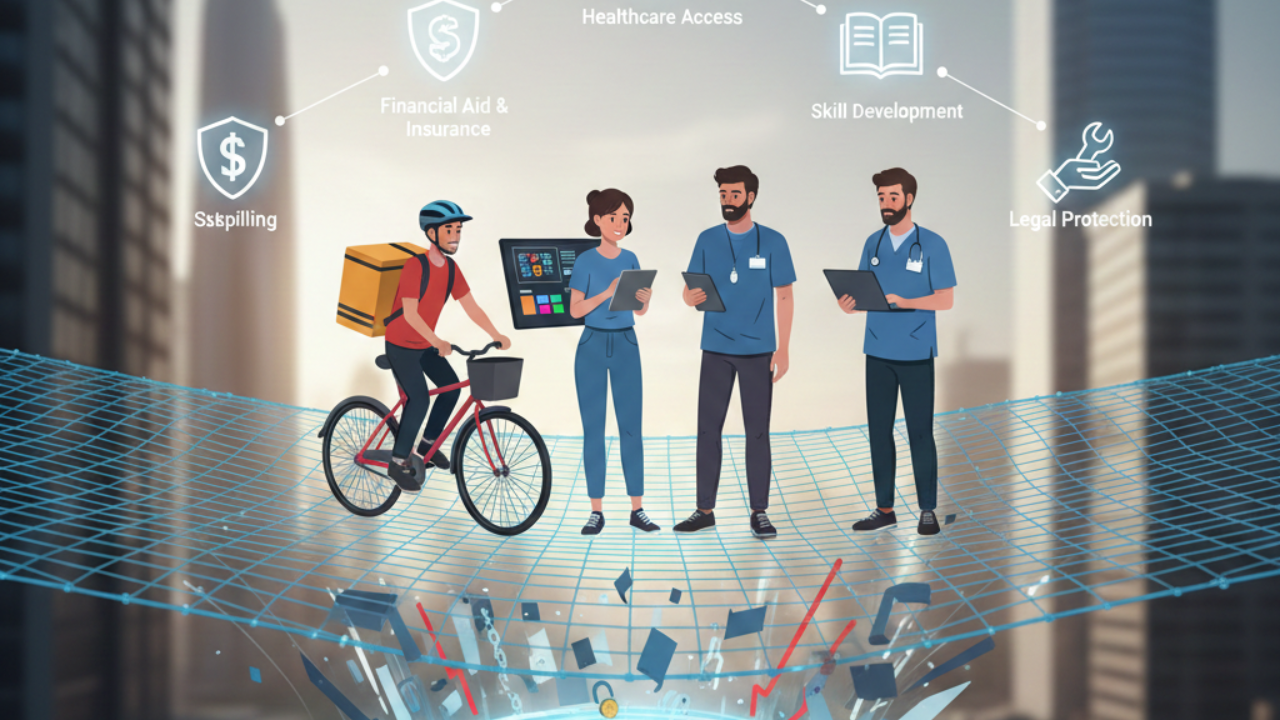
Gigsters should be aware of and avail themselves of safety nets to ensure they stay safe in terms of financial issues and unexpected risks. They must strategize on crisis, illness, and long-term financial stability themselves, which regular employees do not have to worry about. Until you implement the appropriate safety measures, an untimely accident, disease, or fall in the work demand might impose a significant financial burden on your wallet.
Financial safety nets that gig workers should possess would include emergency funds, health insurance, retirement plans, and liability coverage. A fund is a security that can be used in times of need when you lack money or when there is a need to cover something that may occur unforeseen. Health insurance will save your purse against the expensive health care. Retirement planning ensures that there will be long-term money and liability insurance helps protect.
The financial safety nets are as important as the social and legal safety nets. Disability insurance, access to professional associations or unions, and the advice of a lawyer can help gig workers to protect themselves and manage employment insecurity. These services can assist those independent workers to enjoy the same tools as the traditional workers do, such as advice and support, as well as the capacity to negotiate as a group.
The Gig Economy Explained
Short-term contracts, freelance, and on-demand jobs are more prevalent in the gig economy as compared to full-time jobs. The gig economy has expanded at a quicker rate with the assistance of technology platforms such as Uber, Upwork, Fiverr, and DoorDash that have linked millions of workers with clients and customers in the entire world.
The sites offer convenience in earning money and working at their own convenience, but they leave much of the risks involved in employment on the employee. Since gig workers not offered the same benefits as regular employees, they must save in advance in case of an emergency, legal trouble, or long-term financial commitments.
Making a Full Safety Net
There is a multi-layered approach by a really powerful freelancer:
- Financial base: emergency funds, health insurance, savings (retirement), and liability insurance.
- The law and society can assist by legal contracts, disability insurance, professional associations, etc.
- Other physical and mental health indicators are such aspects as personal safety and mental health and wellness practices.
- Constant learning and preparation: This allows you to keep abreast of any changes happening on the platform, the guidelines, and how to make money.
Bringing these components together, gig workers will be able to reduce their risks, make their jobs more secure, and preserve the autonomy that generates the desire to work independently.
The Risks that Are the Most Important to Gig Workers
The risks that gig workers have that are not part of traditional workers include:
- Unpredictable earnings: Gig work can change depending on demand, season, or the algorithm on the platform, so it is difficult to determine the amount of money you will earn.
- The benefits, such as health insurance, retirement funds, paid leave, and disability coverage, are offered very frequently to employees.
- Legal and liability risk: Gig workers might be directly responsible due to accidents, errors, or conflicts with the clients.
- Health and safety hazards: There are gig jobs, such as driving people around or delivering things, which may be hazardous.
These issues demonstrate the importance of safety nets that constructed especially for people who work on gigs.
Money Safety Nets
The biggest issue for gig workers is their financial security since they forced to cope with irregular income and crises that may occur at any moment. The following are some of the significant financial safety nets:
- Saving in case of emergency: It is quite essential to have a good emergency fund. Majority of experts suggest that you ought to save enough money that will cover three to six months of living expenses in case of an emergency or in the event that you have no adequate money to meet your bills.
- Health insurance: The gig workers, unlike traditional employees, typically need to get their own health insurance or access government policies such as marketplace plans or subsidies.
- Retirement preparation: Gig workers must save themselves through some means, such as Individual Retirement Accounts (IRAs), Solo 401(k) plans, or other methods of investment.
Steps for Health and Safety
Another important aspect of being a freelancer is staying physically safe. Some things you could do are
- It is important to wear protective equipment when performing manual work or transporting products.
- In the course of your ridesharing or delivery payments, you should never disobey the rules of the road and traffic laws.
- Enhance pauses so that you are not tired or injured as a result of doing the same thing repeatedly.
- Seeking help with your mental health since gig work is difficult and lonely sometimes.
- These measures present an individual safety net that is in collaboration with social and financial safeguards.
Technology-based and platform-based Safety Nets
- Most gig sites now have partial safety nets, and they all are incredibly dissimilar to any other.
- Insurance: Some platforms offer only minimal coverage for accidents or debts incurred while working.
- Conflict resolution: The platforms can used to help the workers and clients resolve their conflicts.
- On platforms, there are educational materials on a very broad area, including safety, tax payment, and career advancement.
- Gig workers must look into what exists and develop additional safety nets when necessary.
Investing in the Long-Term Security and Well-Being
Gig work is an opportunity with flexibility, but with its own risks because it does not provide any traditional employment benefits. Gig workers can use the safety nets that are available such as medical coverage, income protection, retirement planning, legal protections, and financial literacy to cushion themselves against unexpected setbacks.
These safety nets should be established proactively so that the workers not only survive but also thrive in the gig economy. An integrated risk management strategy will increase financial sustainability, a general healthy lifestyle, and empower gig workers to take the advantage of the opportunities available through flexible, independent employment and reduce the potential undergoings.